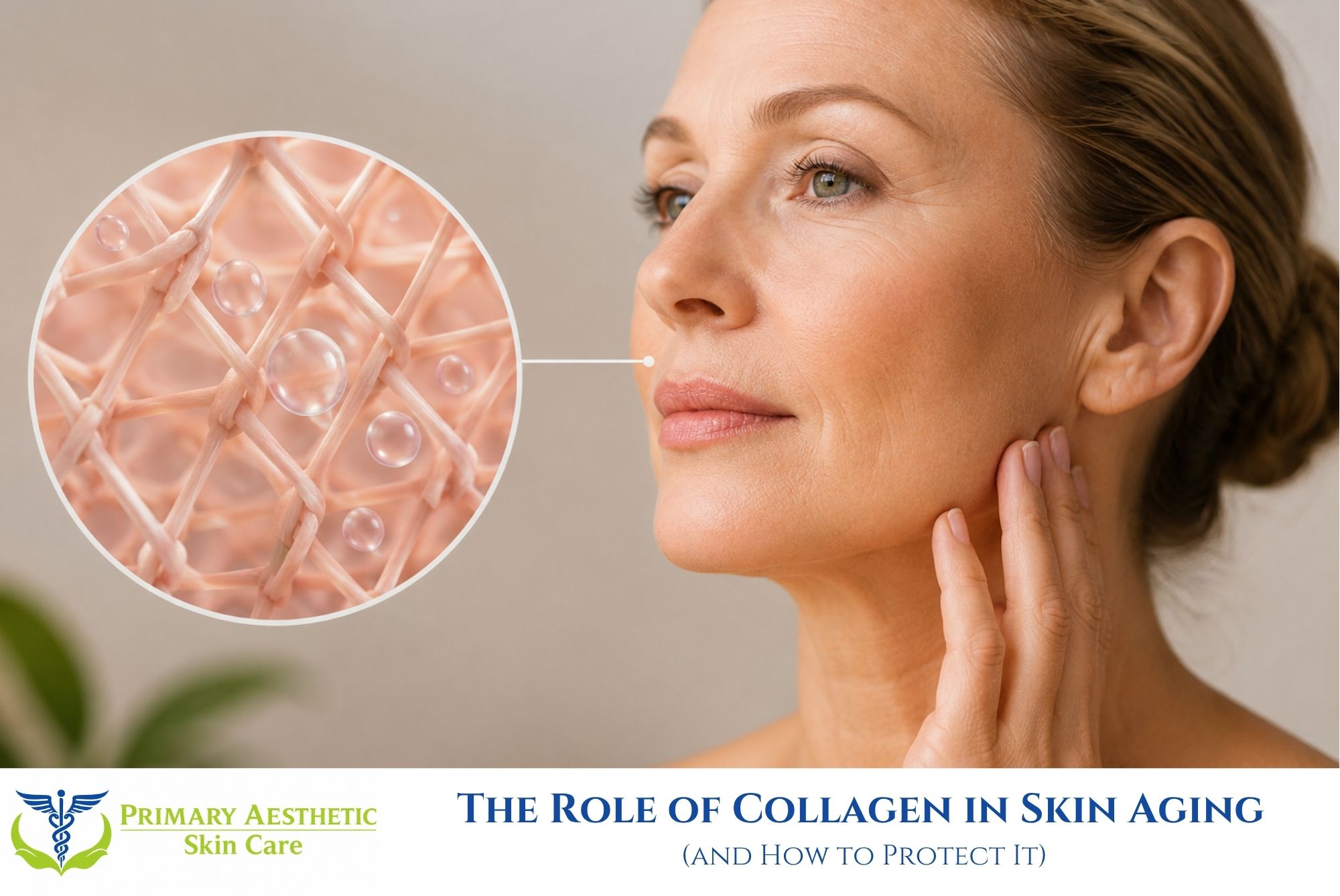
 As we age, one of the most significant changes that occurs within our skin is the gradual loss of collagen. Often referred to as the skin’s “building block,” collagen is a vital protein responsible for maintaining firmness, elasticity, hydration, and overall skin structure. Understanding collagen’s role in skin aging can help individuals make informed decisions about their skincare habits and lifestyle choices to support healthier-looking skin for years to come.
At Primary Aesthetic Skin Care, we believe that education is one of the most powerful tools for maintaining healthy, radiant skin. Let’s explore what collagen is, why it matters, and how you can help protect your skin’s natural collagen reserves.
What Is Collagen?
Collagen is the most abundant protein in the human body, accounting for approximately 30% of the body’s total protein content. It serves as a structural framework for skin, bones, muscles, tendons, and connective tissues.
Within the skin, collagen fibers create a supportive network that helps maintain:
- Skin firmness
- Elasticity and resilience
- Smooth texture
- Hydration retention
- Structural integrity
When collagen levels are abundant, skin tends to appear plump, youthful, and healthy. As collagen production slows down over time, visible signs of aging begin to emerge.
How Collagen Changes With Age
Beginning in our mid-20s, collagen production naturally starts to decline. Research suggests that adults may lose approximately 1% of their collagen each year after this point. Over time, existing collagen fibers also become weaker and less organized.
This gradual decline can contribute to:
Fine Lines and Wrinkles
As collagen levels decrease, the skin becomes thinner and less capable of maintaining its smooth surface. Repeated facial expressions and environmental stressors become more visible, leading to wrinkles and fine lines.
Loss of Skin Firmness
Collagen provides structural support that helps skin remain firm and lifted. Reduced collagen can contribute to sagging skin and changes in facial contours.
Reduced Elasticity
Collagen works alongside elastin, another important protein responsible for skin flexibility. When collagen diminishes, skin may not bounce back as effectively after stretching.
Thinner Skin
Collagen loss can lead to a decrease in skin thickness, making the skin appear more fragile and susceptible to visible damage.
Slower Healing
Collagen plays a critical role in tissue repair. Reduced collagen production may slow the skin’s natural recovery processes.
Factors That Accelerate Collagen Breakdown
While aging is inevitable, several external factors can accelerate collagen degradation.
Sun Exposure
Ultraviolet (UV) radiation is one of the leading causes of premature skin aging. UV rays penetrate the skin and generate free radicals that damage collagen fibers and inhibit new collagen production.
Smoking
Smoking introduces harmful chemicals into the body that reduce blood flow to the skin and accelerate collagen breakdown, often contributing to wrinkles and dullness.
Poor Nutrition
A diet lacking essential vitamins, minerals, and antioxidants may limit the body’s ability to produce and maintain healthy collagen.
Excessive Sugar Consumption
High sugar intake can trigger a process called glycation, which damages collagen and elastin fibers, making them stiff and less functional.
Chronic Stress
Prolonged stress increases cortisol levels, which may contribute to inflammation and negatively affect collagen production over time.
Environmental Pollution
Airborne pollutants generate oxidative stress that can weaken collagen and accelerate visible aging.
How to Protect Your Skin’s Collagen
Although collagen loss cannot be completely prevented, there are several proactive steps you can take to help support your skin’s natural collagen reserves.
Wear Sunscreen Daily
Consistent sun protection is one of the most effective ways to preserve collagen.
Choose a broad-spectrum sunscreen with SPF 30 or higher and apply it every day, even during cloudy weather.
Eat a Collagen-Friendly Diet
Certain nutrients support collagen production, including:
- Vitamin C
- Zinc
- Copper
- Amino acids
- Antioxidants
Foods that may support healthy collagen production include:
- Citrus fruits
- Berries
- Leafy greens
- Fish
- Eggs
- Nuts and seeds
- Lean proteins
Stay Hydrated
Proper hydration helps maintain skin function and supports a healthy skin barrier, contributing to a smoother and more youthful appearance.
Avoid Smoking
Eliminating tobacco use can significantly benefit overall skin health and help reduce premature collagen loss.
Manage Stress
Practicing stress-reduction techniques such as exercise, meditation, adequate sleep, and mindfulness may help minimize inflammation and support skin wellness.
Establish a Consistent Skincare Routine
Using high-quality skincare products tailored to your skin’s needs can help protect against environmental damage and support overall skin health.
The Importance of Professional Skin Evaluations
Every individual’s skin ages differently based on genetics, lifestyle, and environmental exposure. A professional skin evaluation can help identify factors that may be impacting your skin health and provide guidance on maintaining a personalized skincare routine.
At Primary Aesthetic Skin Care, our experienced team is dedicated to helping clients understand their skin and develop customized strategies for long-term skin wellness.
Healthy Habits Today Can Benefit Your Skin Tomorrow
Collagen is essential for maintaining youthful, resilient skin. While natural aging causes collagen production to decline over time, healthy lifestyle habits and proper skincare practices can help support your skin’s appearance and overall health.
By prioritizing sun protection, balanced nutrition, hydration, and professional skincare guidance, you can take meaningful steps toward preserving your skin’s natural beauty and confidence at every stage of life.
If you have questions about your skin concerns or would like professional guidance, the team at Primary Aesthetic Skin Care is here to help.
Frequently Asked Questions (Q&A)
What is collagen and why is it important for skin?
Collagen is a structural protein that provides strength, firmness, and elasticity to the skin. It helps maintain a smooth, youthful appearance and supports overall skin health.
At what age does collagen production begin to decline?
Collagen production typically begins to decrease in the mid-to-late twenties and continues to decline gradually with age.
What are the first signs of collagen loss?
Common early signs include fine lines, reduced skin elasticity, dryness, and a gradual loss of firmness.
Can sun exposure affect collagen?
Yes. Ultraviolet (UV) radiation from the sun is one of the leading causes of collagen breakdown and premature skin aging.
Does diet play a role in collagen health?
Absolutely. Nutrients such as vitamin C, zinc, copper, and protein help support the body’s natural collagen production processes.
How does smoking impact collagen?
Smoking accelerates collagen degradation by reducing blood flow to the skin and increasing oxidative stress, contributing to premature aging.
Is collagen loss reversible?
Natural aging cannot be reversed, but healthy lifestyle choices and professional skincare guidance can help support overall skin health and appearance.
Why is sunscreen important for preserving collagen?
Sunscreen helps protect the skin from UV damage, which is one of the primary causes of collagen breakdown.
Can stress affect skin aging?
Yes. Chronic stress may increase inflammation and cortisol levels, both of which can negatively impact skin health over time.
How can Primary Aesthetic Skin Care help?
Primary Aesthetic Skin Care offers professional skin evaluations and personalized skincare guidance to help individuals better understand and care for their unique skin concerns.
Contact Information
Primary Aesthetic Skin Care
Phone: (914) 234-8670
Website: https://primaryaestheticskincare.net
Bedford Location
460 Old Post Road
Suite 2G
Bedford, NY 10506
Armonk Location
430 Bedford Road
North Castle, NY 10504