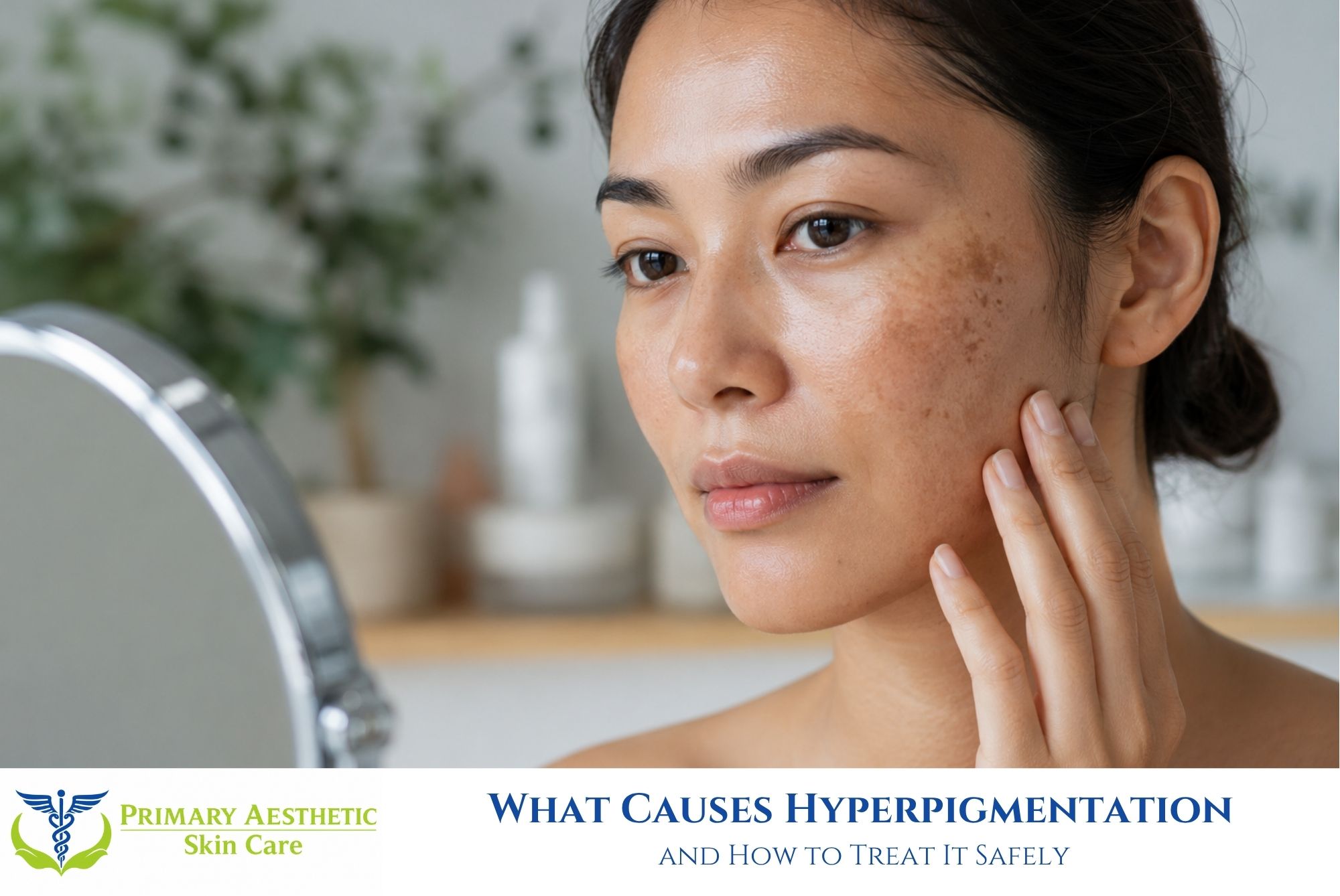
 Hyperpigmentation is one of the most common skin concerns affecting people of all ages and skin types. Whether it appears as dark spots after acne, sun-induced discoloration, melasma, or uneven skin tone, hyperpigmentation can impact confidence and make achieving a radiant complexion more challenging.
The good news is that hyperpigmentation can often be effectively treated when its underlying cause is properly identified. At Primary Aesthetic Skin Care, we help patients throughout Bedford and Armonk, NY achieve healthier, more even-toned skin through customized treatment plans designed to safely address pigmentation concerns.
In this guide, we’ll explain what causes hyperpigmentation, the different types of pigmentation issues, and the safest, most effective treatment options available today.
What Is Hyperpigmentation?
Hyperpigmentation occurs when certain areas of the skin produce excess melanin, the pigment responsible for skin color. This excess melanin causes patches, spots, or areas of skin to appear darker than the surrounding skin.
Hyperpigmentation can develop anywhere on the body but most commonly affects the:
- Face
- Neck
- Chest
- Hands
- Shoulders
- Arms
While generally harmless, hyperpigmentation can be stubborn and difficult to fade without professional intervention.
Common Causes of Hyperpigmentation
Understanding the cause of your pigmentation is essential for selecting the most effective treatment.
Sun Exposure
Ultraviolet (UV) rays are among the leading causes of hyperpigmentation. Prolonged sun exposure triggers increased melanin production as the skin attempts to protect itself from damage.
This can lead to:
- Sunspots
- Age spots
- Freckles becoming darker
- Uneven skin tone
Even brief daily exposure without sunscreen can worsen existing pigmentation over time.
Post-Inflammatory Hyperpigmentation (PIH)
PIH develops after skin inflammation or injury. Common triggers include:
- Acne breakouts
- Eczema
- Skin irritation
- Cuts or burns
- Aggressive skincare treatments
As the skin heals, excess pigment may remain behind, creating dark spots that persist for months or longer.
Melasma
Melasma is a chronic pigmentation condition characterized by symmetrical brown or gray-brown patches, often on the:
- Forehead
- Cheeks
- Upper lip
- Chin
Melasma is frequently linked to:
- Hormonal changes
- Pregnancy
- Birth control medications
- Hormone replacement therapy
- Sun exposure
Because melasma can be particularly stubborn, professional treatment is often necessary.
Aging
As skin ages, years of cumulative sun exposure and environmental damage can cause age spots and uneven pigmentation to become more noticeable.
Certain Medications
Some medications may increase sensitivity to sunlight or affect melanin production, including:
- Antibiotics
- Certain anti-inflammatory drugs
- Chemotherapy medications
- Hormonal medications
Skin Trauma
Injuries, cosmetic procedures, or excessive picking at the skin can stimulate pigment production and lead to discoloration.
Why Professional Diagnosis Matters
Not all dark spots are the same. A treatment that works well for sunspots may not be appropriate for melasma or post-inflammatory hyperpigmentation.
Professional skin analysis helps determine:
- The type of pigmentation present
- The depth of the pigment
- Contributing lifestyle factors
- The safest treatment approach for your skin type
At Primary Aesthetic Skin Care, personalized evaluations help ensure treatments target the root cause rather than simply masking symptoms.
Safe and Effective Hyperpigmentation Treatments
Medical-Grade Skincare
Professional skincare products often contain ingredients clinically proven to reduce pigmentation, including:
- Vitamin C
- Retinol
- Niacinamide
- Kojic acid
- Azelaic acid
- Alpha hydroxy acids (AHAs)
These ingredients help regulate melanin production while promoting healthy skin cell turnover.
Chemical Peels
Chemical peels exfoliate damaged outer skin layers, revealing fresher, brighter skin underneath.
Benefits include:
- Reduced dark spots
- Improved skin texture
- Enhanced skin radiance
- More even complexion
Professional peels can be customized based on skin sensitivity and pigmentation severity.
Microneedling
Microneedling stimulates collagen production and supports natural skin renewal.
For hyperpigmentation, microneedling may:
- Improve skin tone
- Reduce acne-related discoloration
- Enhance product absorption
- Support overall skin rejuvenation
Customized Facial Treatments
Advanced facial treatments designed specifically for pigmentation concerns can improve:
- Skin clarity
- Hydration
- Texture
- Overall brightness
Customized treatment plans often combine multiple therapies for optimal results.
Daily Sun Protection
Regardless of the treatment selected, sunscreen remains the most important step in preventing pigmentation from worsening.
Experts recommend:
- Broad-spectrum SPF 30 or higher
- Daily application
- Reapplication every two hours when outdoors
- Protective hats and sunglasses
Without sun protection, even successful treatments may produce only temporary improvements.
Treatments to Avoid Without Professional Guidance
Some over-the-counter products and DIY remedies can worsen pigmentation, especially in individuals with sensitive skin or darker skin tones.
Potential risks include:
- Skin irritation
- Inflammation
- Increased pigmentation
- Scarring
- Uneven results
Professional guidance helps ensure treatments are both safe and effective.
How Long Does It Take to See Results?
The timeline varies depending on:
- Type of pigmentation
- Depth of discoloration
- Skin type
- Treatment method
- Sun exposure habits
Many patients notice improvements within several weeks, while more stubborn pigmentation may require multiple months of consistent treatment.
Patience and consistency are key to achieving lasting results.
Preventing Future Hyperpigmentation
Prevention plays a major role in maintaining an even complexion.
Helpful prevention strategies include:
- Daily sunscreen use
- Prompt acne treatment
- Avoiding skin picking
- Using physician-recommended skincare products
- Protecting skin from excessive sun exposure
- Following post-treatment care instructions carefully
Why Choose Primary Aesthetic Skin Care?
At Primary Aesthetic Skin Care, we understand that no two cases of hyperpigmentation are alike. Our personalized approach focuses on identifying the underlying cause of pigmentation and creating customized treatment plans designed to safely restore a brighter, more even complexion.
Our experienced team provides advanced aesthetic skincare services in a comfortable, welcoming environment, helping patients throughout Bedford and Armonk achieve healthy, beautiful skin with confidence.
Frequently Asked Questions About Hyperpigmentation
What is the main cause of hyperpigmentation?
The most common causes include sun exposure, acne scars, inflammation, hormonal changes, aging, and certain medications.
Can hyperpigmentation go away on its own?
Some mild cases may fade over time, but many forms of hyperpigmentation can persist for months or years without professional treatment.
Is hyperpigmentation permanent?
Most hyperpigmentation is not permanent. However, some deeper pigmentation issues may require multiple treatments and ongoing maintenance.
Does sunscreen help with hyperpigmentation?
Yes. Daily sunscreen use is one of the most important steps in preventing existing pigmentation from worsening and reducing the risk of new discoloration.
Which treatment works best for dark spots?
The best treatment depends on the cause and severity of the pigmentation. Options may include medical-grade skincare, chemical peels, microneedling, and customized facial treatments.
Can acne cause hyperpigmentation?
Yes. Post-inflammatory hyperpigmentation commonly develops after acne lesions heal, leaving behind dark spots.
Is melasma different from regular dark spots?
Yes. Melasma is a hormonal pigmentation condition that often appears in larger patches and can be more challenging to treat than standard sunspots or acne-related pigmentation.
How many treatments will I need?
Treatment plans vary depending on your skin condition and goals. Many patients benefit from a series of treatments combined with professional skincare products.
Are hyperpigmentation treatments safe for all skin types?
When performed by experienced professionals, many pigmentation treatments can be safely customized for a wide range of skin types and tones.
When should I see a skincare professional for hyperpigmentation?
If pigmentation is worsening, affecting your confidence, or not responding to over-the-counter products, a professional consultation can help determine the safest and most effective treatment approach.
Contact Primary Aesthetic Skin Care
Primary Aesthetic Skin Care
Bedford Location
460 Old Post Road
Suite 2G
Bedford, NY 10506
Armonk Location
430 Bedford Road
North Castle, NY 10504
Phone: (914) 234-8670
Website: https://primaryaestheticskincare.net